
Guide To Visiting Otomí Ceremonial Center
Centro Ceremonial Otomí


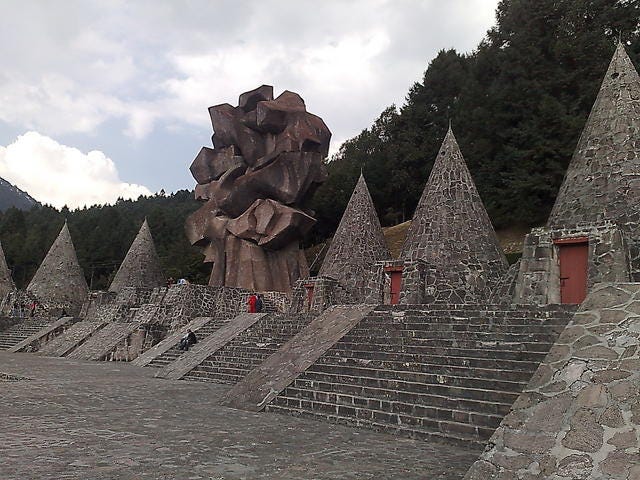
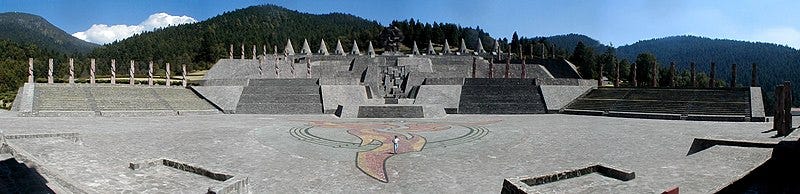
Unlike many historical sites in Mexico, the Otomí Ceremonial Center is not actually ancient. It was built in the 1970s and opened to the public in 1980 as a place for the Otomí people to practice their ancestral and sacred ceremonies. However, its modern construction does not mean it is any less impressive.
The History & Location
The center is located about 20 miles northeast of Toluca in a small town called Temoaya. While the structures themselves are modern, the area has been used to practice Otomí traditions for centuries. Most of their original sacred sites were destroyed long ago during the colonial era, making this center a vital point of cultural reclamation.
Pop Culture Claims to Fame
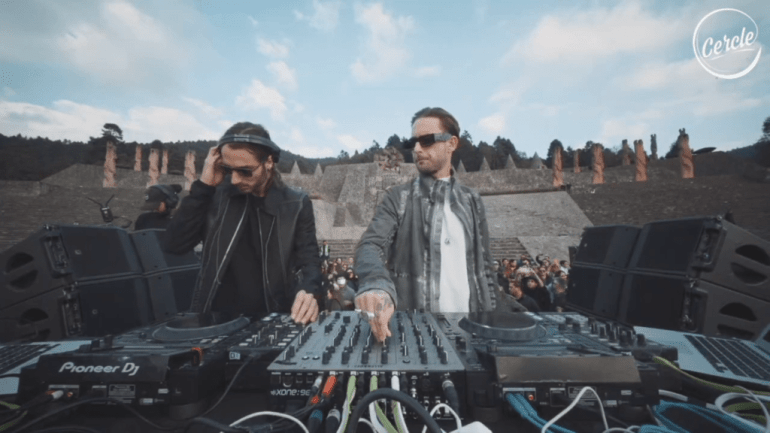
Because of its unique, brutalist-inspired architecture and high-altitude setting, the location has been a favorite for major film and music productions. If the stone plazas look familiar, you may recognize them from:
James Bond: Scenes from the 1989 film Licence to Kill.
Daddy Yankee: The iconic music video for “Limbo.”
Live Events: Various massive music concerts and festivals.
The History of the Otomí
The Otomí are an indigenous group who claim to be the original settlers of the region, predating the arrival of the Aztecs. While many historians believe they were the first inhabitants of the Valley of Mexico, they were eventually expelled in 1418 by the Tepanec.
As the Aztec Empire expanded, the Otomí kingdom was conquered by the Mexica and their allies, forcing the Otomí people to pay tribute to the Aztec Triple Alliance. History indicates that this final conquest took place around 1500—only 20 years before the arrival of Hernán Cortés.
Throughout their history, the Otomí remained a constant challenge for the Aztecs. When the Spanish arrived, the Otomí joined forces with them to help overthrow the Aztec Triple Alliance. (It is worth noting that the Aztecs are also commonly referred to as the Mexica).
How to Visit the Otomí Ceremonial Center
Visiting the Otomí Ceremonial Center is not as straightforward as reaching more popular tourist destinations. Buses leave for the center every 30 to 60 minutes, but there is no official set schedule. Additionally, the station desks often do not display exact departure times. Your best bet is to arrive in the morning and expect the bus to depart at the top of each hour.
It is important to keep in mind that the Otomí Ceremonial Center is located in a remote area. While the area is safe, do not expect fancy arrival or departure boards. You will likely need to use basic Spanish or have Google Translate ready to help navigate the logistics.
Summary of Tips for Your Visit:
Arrive early: Plan to get to the station in the morning.
Watch the clock: Expect buses to depart at the top of each hour.
Be flexible: Do not rely on printed schedules or digital boards.
Bridge the language gap: Be prepared to communicate in basic Spanish or use translation tools.
Getting There: Central de Autobuses Observatorio
(Also known as Central de Autobuses Poniente)
Once you arrive at the bus station, look for the Flecha Roja desk to purchase your ticket. As of April 2023, the cost for a one-way ticket is about 80 pesos.
Don’t worry about the quality of the ride. In Mexico, buses are typically quite comfortable, featuring reclining seats and overhead TVs. Depending on the distance, many even offer bathrooms and Wi-Fi. Sit back, relax, and enjoy the scenery on your way to Temoaya.

Arrival in Temoaya
After about an hour, the bus will drop you off at the Flecha Roja - Temoaya depot. Don’t be thrown off by the appearance; it’s a rickety, old-school bus station, but it’s the primary hub for the area.


The Final Leg: Taxi vs. Shuttle
Once you arrive at the depot, the easiest move is to follow the local crowd walking up the street to find a taxi. The bus station is essentially a small dirt parking lot, so don’t expect a formal shuttle desk or clear signage.
To get from the station to the Otomí Ceremonial Center, you have two main options:
Taxis: These are usually waiting right at the station. Fares are negotiable, typically ranging from 30 to 80 pesos. During my visit, we paid 30 pesos per person for a two-person ride.
The Shuttle: If you’re lucky, a local shuttle may be available for around 20 pesos. However, it does not run on a “regular” schedule; it wasn’t there when we arrived, so a taxi is the more reliable bet.
The Return Strategy
Because schedules are rarely posted, it is critical to ask your taxi driver or the station staff when the last bus leaves. During my visit, I was given a rough estimate of 6:00 PM, but keep in mind that departure times are often “fluid.” In this part of Mexico, the bus back to the city often departs based on passenger volume, if the bus isn’t full, the driver may wait for more people before heading out.
The length of the taxi ride can vary from 15 to 40 minutes, depending on the driver and the day. When I visited during Easter weekend, the traffic was heavier, and the trip took about 35 minutes.
Once you arrive at the Otomí Ceremonial Center, you’ll know it immediately. The scale of the site is massive. As of my last visit, the entry fee is about 35 pesos. Simply pay the fee at the gate and enjoy exploring this incredible architectural landmark.
On your way back, you can either take a taxi or hope to get lucky and find a shuttle waiting outside the main gate. During my visit, I was fortunate enough to catch the shuttle back to town for just 20 pesos.
However, it is important to confirm that the shuttle is heading to the town center before getting on. If it isn’t, you may end up in a different part of town and will need to hire a taxi from there to get back to the bus depot.
Overall, the return trip is just as straightforward as the journey to the site. Sit back, relax, and enjoy the ride back to town while reminiscing about the unique architecture and history of the Otomí.