
Debunking the “Expat Invasion”
The Real Stats Behind Americans Living in Mexico

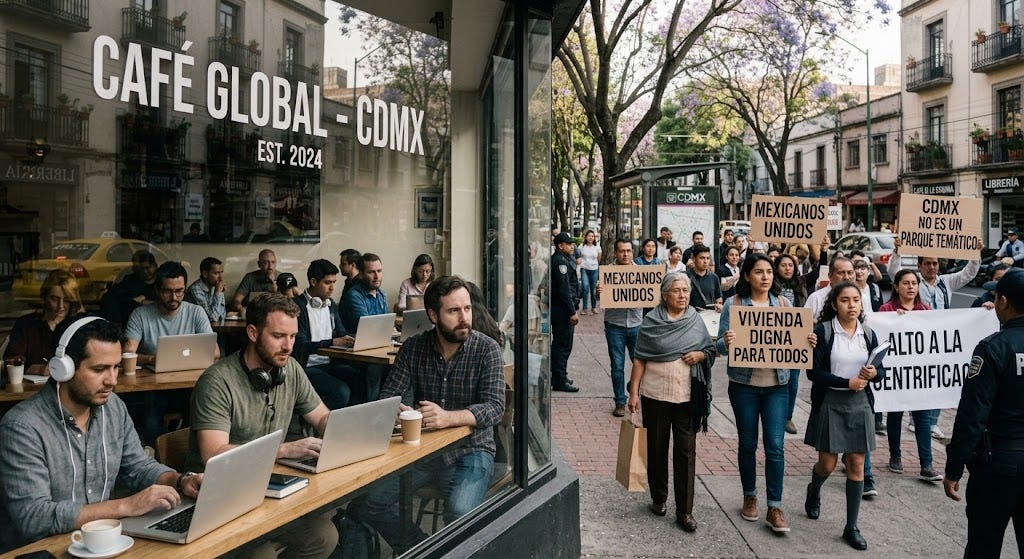
There is a persistent, tired myth floating around social media, foreign coverage, and local discourse that millions of white Americans are invading Mexico…living legally or illegally, driving up the cost of living, gentrifying cities, and destroying local culture.
You constantly see people floating inflated figures like 2 million Americans living in Mexico, while official census and state data put the number between 1 million and 1.6 million at the absolute highest.
These stats are frequently weaponized to push a lazy, xenophobic narrative implying that an army of Anglo digital nomads and retirees is taking over the country. It’s a psychological operation engineered and designed to divert outrage away from real structural failures and project it onto a tiny group of gringos.
When you look at the cold, hard data, the “white expat invasion” collapses entirely.
The Asymmetry of Perception & Return Migration
I have asked many Mexicans how many of their countrymen they think live in the United States. They often guess a couple hundred thousand, or maybe a million or so.
This is mind-boggling considering almost every single family in Mexico has relatives living north of the border. Yet, many struggle to conceptualize or extrapolate that data. Most have no idea how many people even live in Mexico overall.
When I explain that there are over 40 million people of Mexican descent in America, sending back over $60 billion USD in remittances every single year (a massive pillar of Mexico’s national GDP), they are completely dumbfounded.
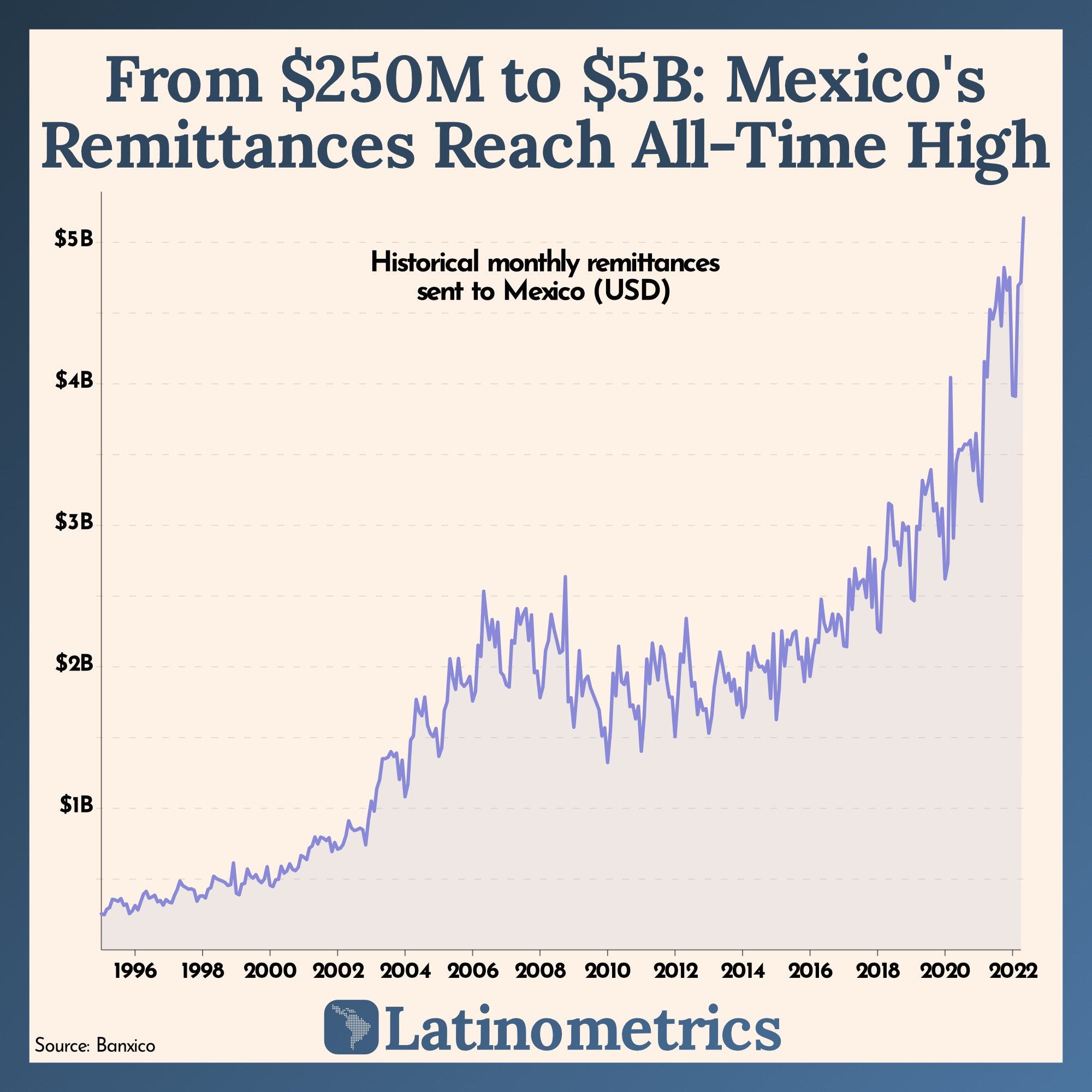
What is even less understood is the reality of net migration dynamics over the last fifteen years. Since the 2008 financial crisis, net migration between the U.S. and Mexico actually flattened and during several years, more Mexicans returned to Mexico than migrated to the U.S.
Many U.S. citizens counted in Mexico’s foreign-born statistics are simply U.S.-born children often labeled as “anchor babies” who returned south with their families due to economic shifts, deportation, or deep family obligations. They aren’t foreign invaders; they are kids moving back to their ancestral homeland with their parents.
Social Security & Legal Residency Numbers
If white retirees were overrunning Mexico, you would see it directly in government paper trails. The data says otherwise…
Social Security
The U.S. Social Security Administration’s Annual Statistical Supplement maxes out at roughly 58,067 total beneficiaries residing in Mexico receiving checks at a Mexican address (with only around 35,000 of those being retired workers). We know that the vast majority of these traditional retirees are heavily consolidated around a few well-known hubs: Lake Chapala/Ajijic, San Miguel de Allende, and along Baja California. Outside these small enclaves, the retiree footprint is practically invisible.

Residency Grants
In terms of official legal residency, while applications have ticked up, Mexican government data shows that only 10,000 to 13,000 Americans are granted temporary or permanent residency in Mexico per year. That is an extremely small number, both in absolute terms and as a percentage compared to the hundreds of thousands of residency grants issued annually by the U.S. or other Western nations.
Who is Actually Living in Mexico?
Now, here is what really crushes the myth once and for all: the actual demographic breakdown of U.S. citizens living in Mexico.
The media assumes the dominant foreign group in Mexico is non-Hispanic retirees and high-earning tech bros. According to both U.S. and Mexican government data, 60% to 80% (averaging around 70%) of U.S. citizens living in Mexico are Mexican-American or of Mexican descent.
The Government of Mexico published a massive 350-page multilingual study detailing U.S.-Mexico migration patterns:
66% of the U.S.-born population in Mexico is under 18 years old (with a median age of around 14).
The Mexican Ministry of the Interior (SEGOB) and the Baker Institute estimate that 500,000 to 600,000 of these U.S. citizens are minors enrolled in Mexican public elementary and middle schools…children brought back by returning Mexican families.
Citizenship by Descent: Roughly half a million U.S.-born residents in Mexico hold dual citizenship by descent (jus sanguinis).
When you take the 1 million to 1.6 million maximum estimate of U.S. citizens in Mexico, subtract the 70% who are Mexican-American returnees, subtract the half million U.S.-born children, and subtract dual citizens, you are left with fewer than 500,000 non-Hispanic Americans in the entire country.
In a nation of 130 million people, non-Hispanic digital nomads and retirees represent less than 0.3% of the total population.
Tourist Visa Loopholes & Informal Living
So if the formal numbers are so low, where are the rest of the nomads coming from?
Many point to the “tourist visa loophole.” Thousands of remote workers enter Mexico on a 180-day Forma Migratoria Múltiple (FMM) tourist permit and live as perpetual tourists, doing regular “border runs” to reset their stay rather than applying for formal residency.
Additionally, Mexico’s immigration enforcement makes overstaying ridiculously easy. The statutory cap on visa overstay fines in Mexico is capped at roughly $6,000 MXN (~$300 USD) regardless of whether you overstayed by three weeks or three years. For a remote worker earning U.S. dollars, paying a $300 fine at the airport terminal on the way out is treated as an informal “convenience tax” rather than a legal barrier.
Even if we conservatively estimate that 50,000 to 100,000 remote workers operate in this informal grey zone at any given time, it still doesn’t come close to altering the macro demographic reality.
Neighborhood Illusion
If Anglo digital nomads make up such a tiny fraction of the population, why are so many Mexicans convinced that white Americans are taking over?
The answer is hyper-concentration….a spatial optical illusion.
Digital nomads do not spread out evenly across Mexico’s 2,400+ municipalities. They stack themselves directly on top of each other inside three or four specific neighborhoods in Mexico City (Roma Norte, Condesa, Juárez, and Polanco) and a handful of coastal beach towns (Tulum, Sayulita, and Puerto Vallarta).

If a local resident in Mexico City walks through Condesa, hears English at every second coffee shop, and sees rent prices soaring in a four-block radius, it feels like an invasion. But confusing a hyper localized cluster in Roma Norte with a large scale takeover is a massive logical fallacy. A couple thousand nomads buying $5 lattes in a trendy zone does not cause nationwide housing inflation across a metro area of 22 million people.
What is Actually Causing the Problem?
We need to stop pretending that a few thousand gringos working on laptops are the root cause of Mexico’s economic friction. Blaming foreigners is an easy, emotionally satisfying distraction from the uncomfortable truth: the real issue is institutional failure and domestic economic mismanagement.
Post-Pandemic Inflation & Market Dynamics: Global supply chain disruptions and post-pandemic monetary expansion drove up asset prices worldwide. From Madrid and Tokyo to Mexico City. Mexico was not immune.
Attempts to Build a Middle Class Without Institutions: Mexico has been striving to pull its economy out of the dirt and foster a thriving domestic middle class.
However, the Mexican government has consistently failed to build the fundamental market institutions required to support that growth, such as modern zoning regulations, long-term urban planning, progressive housing policies, and transparent financial infrastructure.
Government Inefficiency & Tax Evasion: Local housing shortages in major cities are driven by municipal corruption, bureaucratic gridlock, a lack of high-density social housing development, and an informal domestic economy where property taxes (predial) are notoriously undercollected.
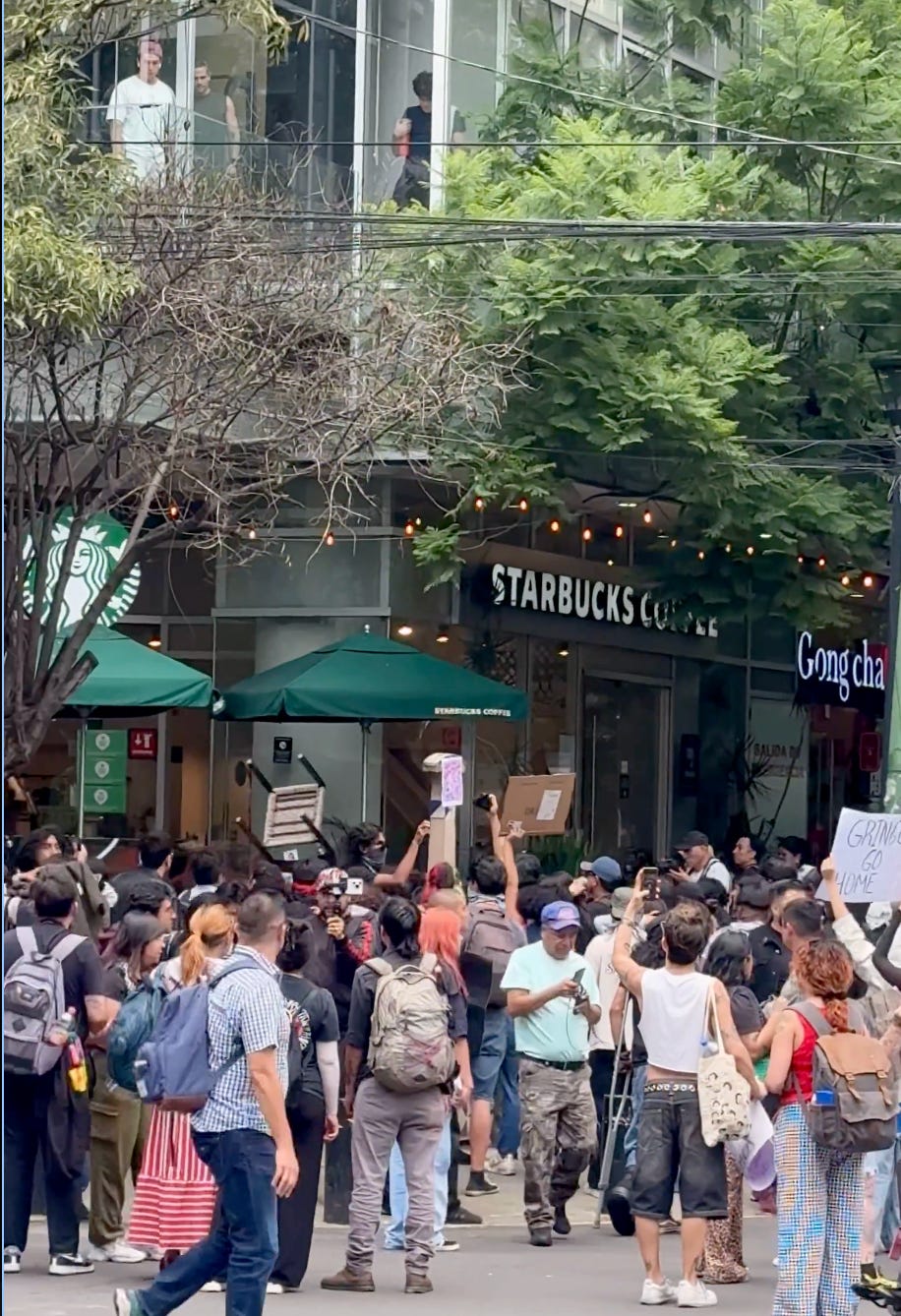
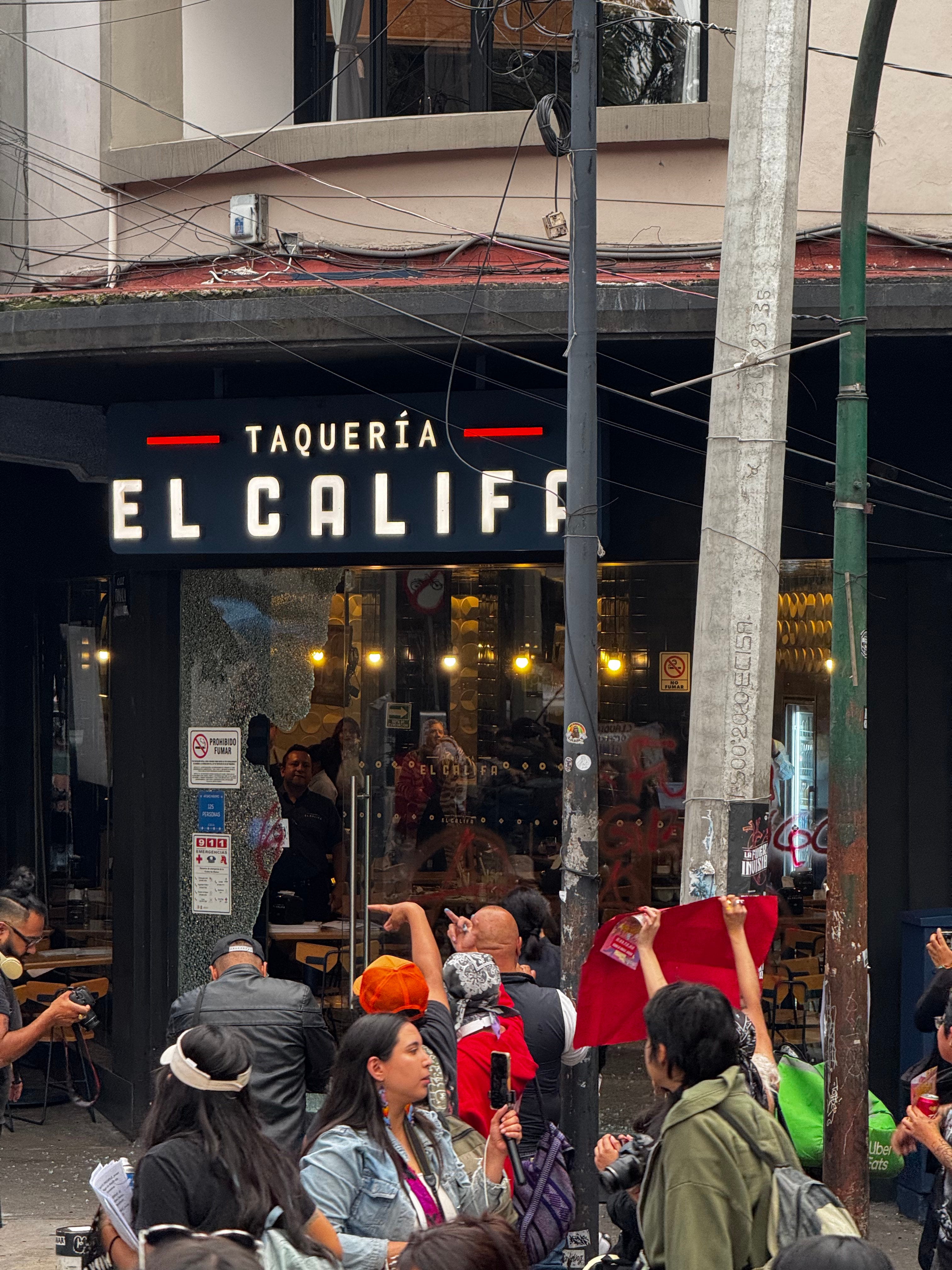
Instead of demanding accountability from municipal and federal leadership for failing to build adequate infrastructure, regulate short-term rental platforms (like Airbnb), or fix housing supply, media commentators find it much easier to point at white faces in cafes and shout “gentrification!”
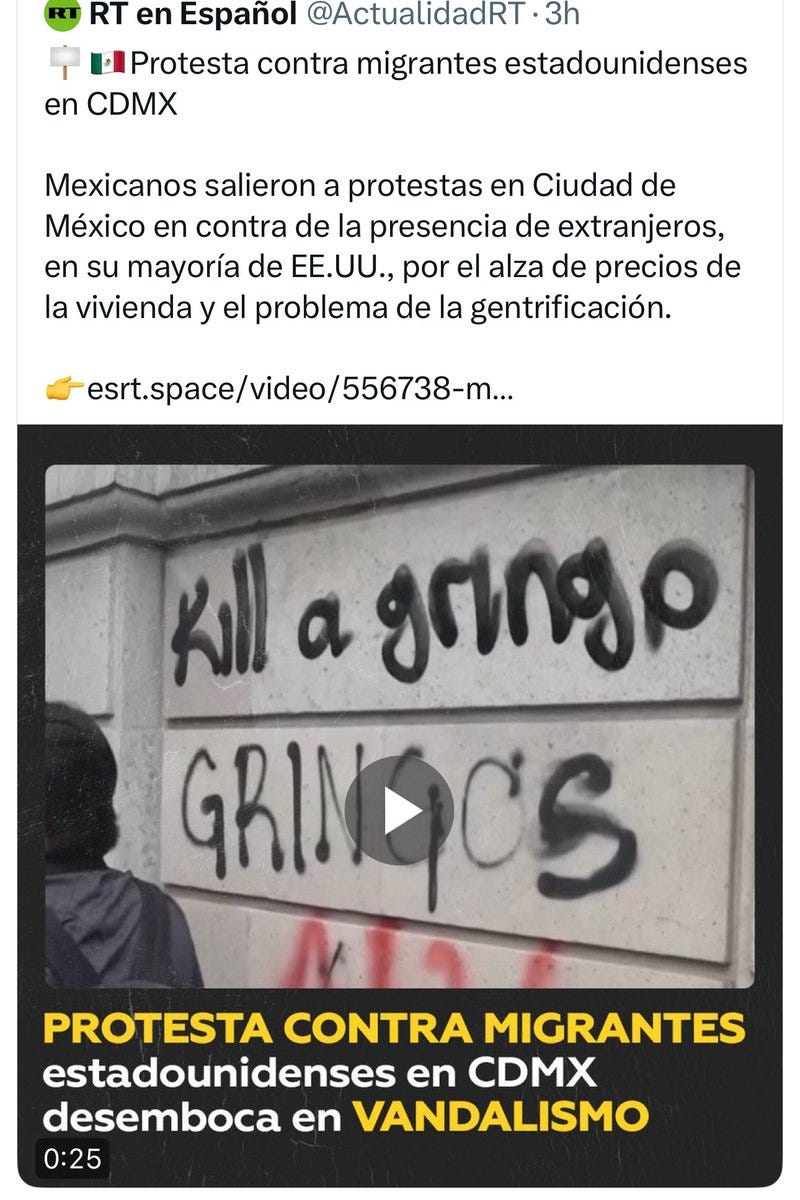
We should be tired of hearing the constant, unearned whining about “white Americans invading Mexico.”
The data does not back it up. The census does not back it up. The Social Security Administration does not back it up.
The vast majority of “Americans” living in Mexico are Mexican Americans coming back to their roots, children attending local schools, and dual nationals integrated into Mexican society.
The Anglo “expat invasion” is a magnified phantom….a localized optical illusion used to dodge the hard realities of Mexican economic governance and institutional inefficiency.
It’s time to bury the myth and focus on the real numbers.
Sources & Reference Data
U.S. Social Security Administration (SSA): Annual Statistical Supplement — OASDI beneficiaries residing in Mexico (~58,067 total beneficiaries; ~34,936 retired workers).
INEGI (Instituto Nacional de Estadística y Geografía): Censo de Población y Vivienda — Count of ~797,000 U.S.-born residents in Mexico, establishing that ~66% are under age 18.
Gobierno de México / CONAPO / INEGI: Prontuario de movilidad humana y migración internacional — 350-page study detailing return migration, U.S.-born minors, and citizenship by descent (jus sanguinis).
Baker Institute for Public Policy (Rice University) & SEGOB (Secretaría de Gobernación): Estimates on U.S.-citizen minors residing in Mexico and Mexican school enrollment figures (~430,000–600,000 range).
Pew Research Center: U.S.-Mexico Return Migration Analysis — Data tracking net migration shifts, post-2008 return flows, and Mexican-American population metrics (~40M of Mexican descent in the U.S.).
U.S. Department of State (Bureau of Consular Affairs): Overseas Citizen Estimates (~1.6M maximum total U.S. citizens in Mexico including dual nationals and unregistered short-term residents).
Instituto Nacional de Migración (INM): Annual reports on temporary/permanent residency permits granted to U.S. nationals (~10,000–13,000 range per year) and FMM visitor permit guidelines.